Drum n Bass
Explore artists, collectives, and events in Drum n Bass.

The African Electronic Music Conference is a year-round platform connecting artists, collectives, industry professionals, and music communities across Africa and the diaspora through events, knowledge-sharing, and opportunities.
© African Electronic Music Conference (AEMC)
Browse genres, playlists, releases, artists, and collectives across African electronic music.
16 results
Explore artists, collectives, and events in Drum n Bass.

Singeli is one of the most powerful musical movements to have emerged in East Africa in recent years. Born over ten years ago in Dar es Salaam, a sprawling capital city at the crossroads of Arab, Indian, and African histories and traditions, singeli stands at the confluence of cultures and generations. Like South African zulu house or Brazilian baile funk, singeli was born out of the absorption and subsequent transformation—even deconstruction—of vernacular music using cheap computer equipment. Between the shores of South African kwaito and Tanzanian hip-hop, singeli borrows from taarab—the traditional Tanzanian music of Zanzibar—as well as the highly electronic mchiriku and the ritual dance mdundiko. Speed it up, add some glitch effects, throw in an ultra-epic flow in Swahili, and you've got singeli. The genre first took hold in block parties in working-class neighborhoods on the outskirts of Dar Es Salaam, and in kigodoro, marathon parties named after the foam mattresses on which dancers collapsed from exhaustion. At weddings, too, singeli and its deluge of beats and machine-gun delivery have replaced traditional orchestras

Singeli is one of the most powerful musical movements to have emerged in East Africa in recent years. Born over ten years ago in Dar es Salaam, a sprawling capital city at the crossroads of Arab, Indian, and African histories and traditions, singeli stands at the confluence of cultures and generations. Like South African zulu house or Brazilian baile funk, singeli was born out of the absorption and subsequent transformation—even deconstruction—of vernacular music using cheap computer equipment. Between the shores of South African kwaito and Tanzanian hip-hop, singeli borrows from taarab—the traditional Tanzanian music of Zanzibar—as well as the highly electronic mchiriku and the ritual dance mdundiko. Speed it up, add some glitch effects, throw in an ultra-epic flow in Swahili, and you've got singeli. The genre first took hold in block parties in working-class neighborhoods on the outskirts of Dar Es Salaam, and in kigodoro, marathon parties named after the foam mattresses on which dancers collapsed from exhaustion. At weddings, too, singeli and its deluge of beats and machine-gun delivery have replaced traditional orchestras
Singeli is one of the most powerful musical movements to have emerged in East Africa in recent years. Born over ten years ago in Dar es Salaam, a sprawling capital city at the crossroads of Arab, Indian, and African histories and traditions, singeli stands at the confluence of cultures and generations. Like South African zulu house or Brazilian baile funk, singeli was born out of the absorption and subsequent transformation—even deconstruction—of vernacular music using cheap computer equipment. Between the shores of South African kwaito and Tanzanian hip-hop, singeli borrows from taarab—the traditional Tanzanian music of Zanzibar—as well as the highly electronic mchiriku and the ritual dance mdundiko. Speed it up, add some glitch effects, throw in an ultra-epic flow in Swahili, and you've got singeli. The genre first took hold in block parties in working-class neighborhoods on the outskirts of Dar Es Salaam, and in kigodoro, marathon parties named after the foam mattresses on which dancers collapsed from exhaustion. At weddings, too, singeli and its deluge of beats and machine-gun delivery have replaced traditional orchestras
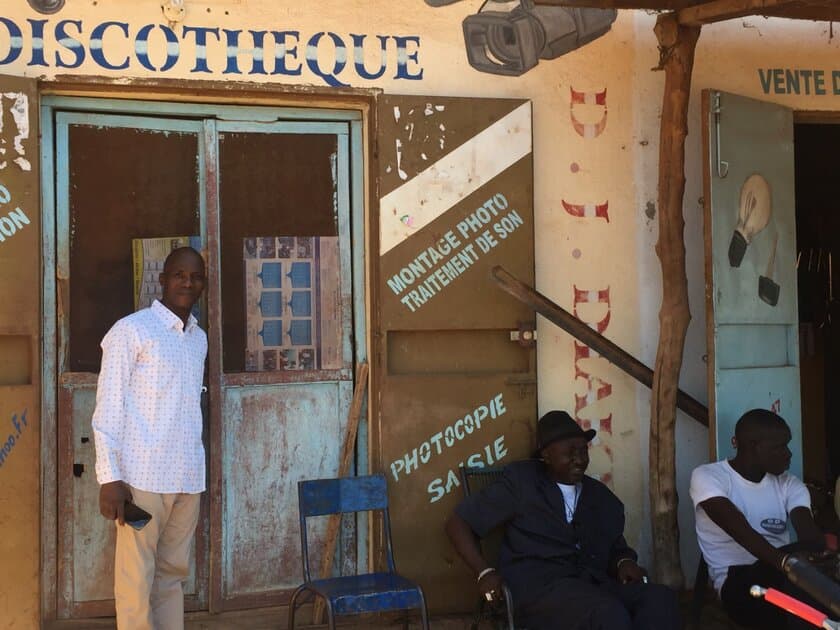
Balani Show began in the late 90s, as DJs with sound systems began to animate social ceremonies. The reason was economic – DJs were cheaper then a Balafon group. While this probably occurred simultaneously throughout Mali, the DJ credited as the originator is Seydou Bagayoko. DJ Diaki and DJ Sandji became his apprentices in the late 90s and early 2000s. Balani Show thrived in the mid-2000s with DJ Senateur performing an official version on Malian television. But in recent years, it has returned to its street culture roots, played in neighborhoods in informal block parties. There is the occasional moral panic, raised by religious leaders, at the site of young people dancing provocatively at night. Occasionally a move will be made to ban Balani Shows, but the legality of the bans are dubious. What the religious opposition has succeeded is in contributing to a general decline of Balani Shows in the capital. DJ Diaki now lives 20km from the Bamako, where Balani Shows are now more common. The village Balani Shows have a completely different element from Bamako – with rapid fire tempos and tranced out loops that extend into mind melting repetition. “It’s much faster in the countryside,” he says. “The people in the village want the music fast. If someone goes to my parties, it’s impossible they dance the whole time.” His video channel illustrates this point. While it may have been the city where Balani Show was born, its back in rural Mali where it has taken on a new form, and where the highest tempo Balani Shows are thriving.
Singeli is one of the most powerful musical movements to have emerged in East Africa in recent years. Born over ten years ago in Dar es Salaam, a sprawling capital city at the crossroads of Arab, Indian, and African histories and traditions, singeli stands at the confluence of cultures and generations. Like South African zulu house or Brazilian baile funk, singeli was born out of the absorption and subsequent transformation—even deconstruction—of vernacular music using cheap computer equipment. Between the shores of South African kwaito and Tanzanian hip-hop, singeli borrows from taarab—the traditional Tanzanian music of Zanzibar—as well as the highly electronic mchiriku and the ritual dance mdundiko. Speed it up, add some glitch effects, throw in an ultra-epic flow in Swahili, and you've got singeli. The genre first took hold in block parties in working-class neighborhoods on the outskirts of Dar Es Salaam, and in kigodoro, marathon parties named after the foam mattresses on which dancers collapsed from exhaustion. At weddings, too, singeli and its deluge of beats and machine-gun delivery have replaced traditional orchestras
Singeli is one of the most powerful musical movements to have emerged in East Africa in recent years. Born over ten years ago in Dar es Salaam, a sprawling capital city at the crossroads of Arab, Indian, and African histories and traditions, singeli stands at the confluence of cultures and generations. Like South African zulu house or Brazilian baile funk, singeli was born out of the absorption and subsequent transformation—even deconstruction—of vernacular music using cheap computer equipment. Between the shores of South African kwaito and Tanzanian hip-hop, singeli borrows from taarab—the traditional Tanzanian music of Zanzibar—as well as the highly electronic mchiriku and the ritual dance mdundiko. Speed it up, add some glitch effects, throw in an ultra-epic flow in Swahili, and you've got singeli. The genre first took hold in block parties in working-class neighborhoods on the outskirts of Dar Es Salaam, and in kigodoro, marathon parties named after the foam mattresses on which dancers collapsed from exhaustion. At weddings, too, singeli and its deluge of beats and machine-gun delivery have replaced traditional orchestras
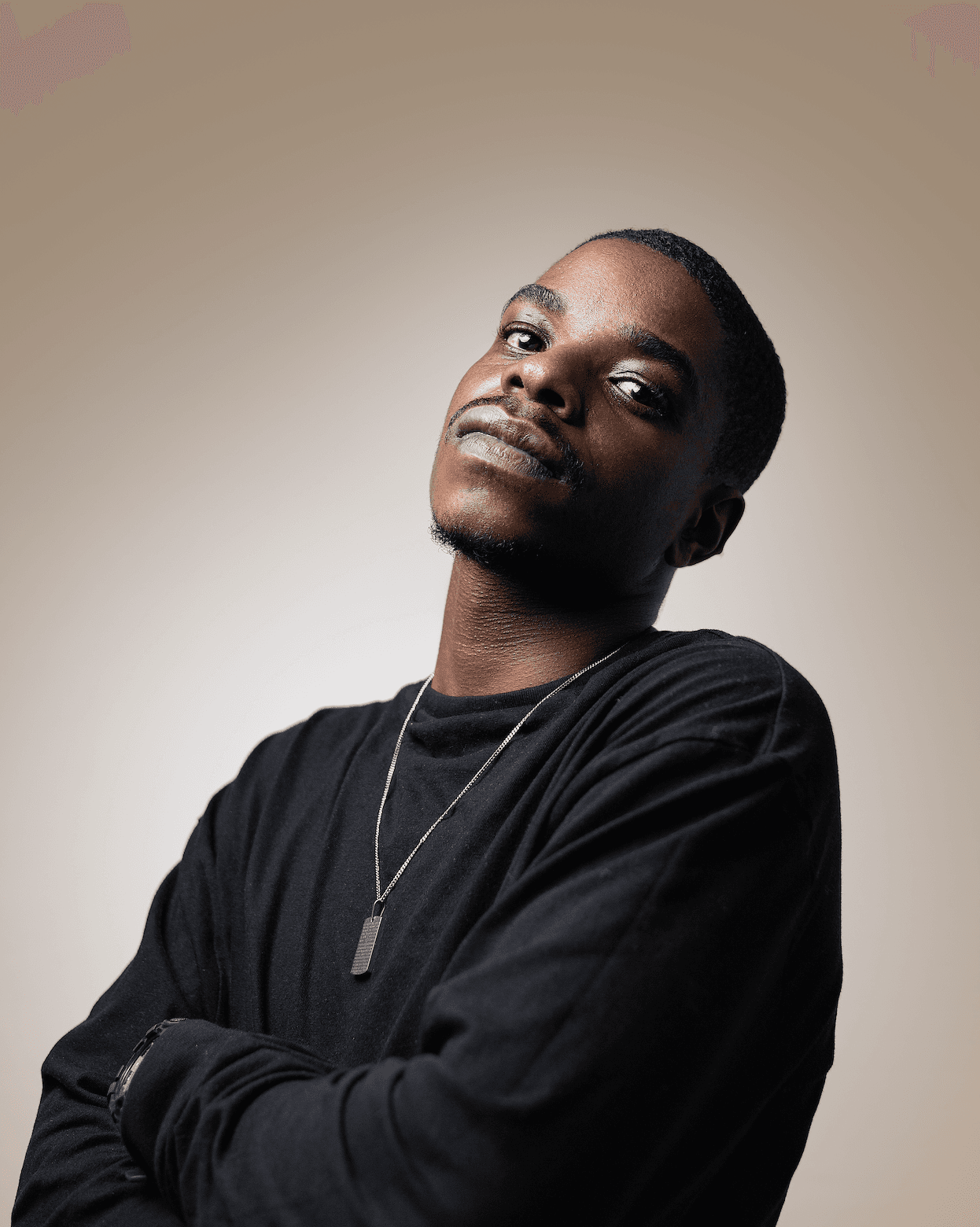
Akiid Musiq, also known as Robot Boi, is a pioneering figure in South Africa’s underground electronic movement, rooted in Gqom but constantly pushing its boundaries with futuristic, high-energy sounds. Known for his raw dancefloor presence and unique sonic identity, Akiid has built a reputation for blending deep township rhythms with global club culture. Recently performing abroad, his sound has been crossing borders and turning heads internationally — and now he returns to the local scene, ready to ignite the festive season with an edge shaped by those global stages. Whether in intimate club spaces or on festival main stages, Robot Boi brings a futuristic intensity that locks crowds into his journey from the first drop to the closing beat.

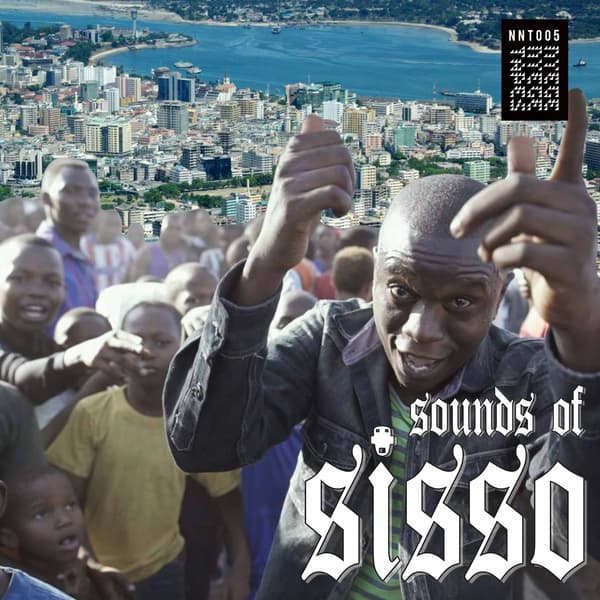
Sisso & Maiko’s productions epitomize Singeli’s hyperlocal scenius, transforming the vitality and struggle of life on the fringes of Dar es Salaam into a unique, high-octane sound. Their fast, pitched-up rhythms create a sublime tension where music seems to accelerate beyond the limits of the dancefloor, recalling mid-’90s UK happy hardcore, Chicago footwork, Caribbean Soca, and Shangaan disco — yet entirely their own. On stage, Sisso & Maiko deliver a mesmerizing live show: frenetic, far-out, and packed with contagious good vibes. Their performances are impossible to resist, keeping audiences dancing from start to finish and translating the chaotic energy of their studio sound into a euphoric, unforgettable experience.

Members : Constantly expanding, AFRO-LAB’s lineup consists of artists, trainers, educators, and community leaders. Genres : African heritage and rhythms, enriched with worldwide influences and modern electronic fusion. A project incubator and community center located five minutes from downtown Gulu, Elephante Commons is home to AFRO-LAB, a creative center and studio. “Our work extends beyond the studio and reaches out to the community with awareness and learning programs, particularly aimed at young audiences,” explains the incubator team. Formed as a local art collective, AFRO-LAB collaborates with young artists from northern Uganda: “The idea here is to use creativity as a lever for healing and empowerment. We believe in the power of music as a tool for resilience.” Positioned as an autonomous “African art laboratory,” this healing space brings together traditional culture, young creativity, and experimentation. It is no coincidence that for two years in a row, the venue has hosted the Nyege Warm-up in Gulu, an eagerly awaited annual pre-party organized entirely by the lab’s young students.
Members : Mask On, Seny D, Sidjey Genres : Rap Ivoire, Afro House, Bouyon, House, UK Bass, Amapiano, African golden era music (70s – 90s) From the old fathers of coupé-décalé to young biamasseurs, rap ivoire parties, maquis bars, and zouglou clubs… Abidjan’s nightlife continues to produce new boucantiers. The latest addition, Djaouli Entertainment, or Djaouli.Ent, has been rocking the city since spring 2022. “Djaouli,” from the Nouchi word for “a turbulent, excited, and energetic person,” oscillates between electronic escapades and African urban cultures: “We see our parties as artistic, social, and community events.” The goal? “To break down barriers between genres, mix audiences of Ivorians, expats, Lebanese, and Asians, break down social divisions, and promote young musical creativity.” United around hip-hop, Afro-dance, house, bouyon, and UK bass aesthetics, the collective has organized more than thirty free, daring parties rooted in African music, with one flagship event: the “Bôrô de Djaouli” parties. The music? “A field of exploration between genres, generations, and geographies!” Starting next year, Djaouli Ent. will launch into production with the release of a first EP of remixes, as well as releases with like-minded organizations, rumored to include Moonshine and Blanc Manioc. Stay tuned!
Founded in 2024 as a series of confidential, intimate raves, Ilé Ijó—literally, the “home of dance”—has become, in just two years, a platform that is reinventing a section of the electronic scene in Nigeria: “The Ilé Ijó experience really started small,” recalls Abiodun Oladokun, founder and artistic director of the collective. “Initially, we would bring together House fans every two months in Lagos. Soon, our desire to experiment took us into many other areas of electronic music.” After nearly a dozen events, the collective has become a reference point for Nigeria's junglettes and junglists, with the creation of the Drum N Bass NG community, a subsidiary entirely dedicated to the genre. On its first anniversary, Ilé Ijó also tried its hand at Tanzanian Singeli by inviting Jay Mitta, a well-known supporter of the Nyege Nyege collective. Focused on research and experimentation, the Lagos team is now building a real scene, capable of inviting other international movements for a night, while working closely with the local electronic culture through the prism of the Yoruba language, culture, and heritage. With a thousand enthusiasts gathering at each of its parties, Ilé Ijó is now one of the major players in Lagos' electronic nightlife.
Members : Dj Aziz, Big Sam, Pweza, Alyssa et Barak. Genres : Tech house, deep house, drum n bass, Afro-house and Afro-tech “Our goal? To build a safe and inclusive community where everyone can have fun and express themselves through music, without borders or discrimination!” A long-term program initiated two years ago by DJ Aziz, Big Sam, and Pweza, who, driven by their love of electronic music, set up the Midimu collective. The name was inherited from the Makonde people and means “masked dancers”: “This name honors the collective’s cultural heritage and symbolizes the transformative and community-building power of music.” The vibrant collective has organized numerous events in Tanzania and in 2023 launched the first edition of its festival, Midi Fest: “We had ten participants in 2023, compared to two hundred in 2024,” say the organizers. Here, the leitmotif is focused on a single goal: “to develop the Tanzanian music scene, promote and raise awareness of different electronic genres, in particular Afro-house and Afro-tech.” In a local scene that is still largely in its infancy, the Midimu collective is on a mission: “to engage the Tanzanian public in techno, house and beyond!”

Kampala-based collective founded in 2013 running two labels (Nyege Nyege Tapes + Hakuna Kulala), an artist residency, a touring agency, and a yearly Pan-African arts festival held in Uganda on the shores of the river Nile.
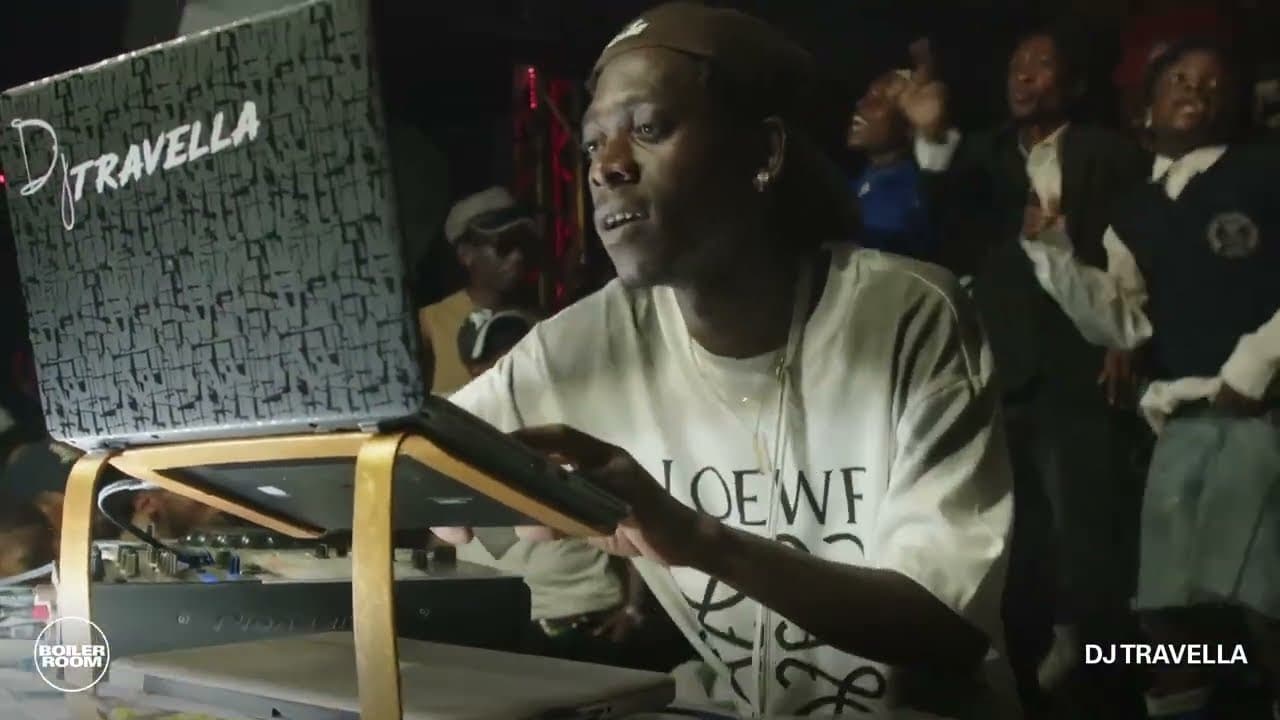
Members : Abbas Alli Jazza, Sisso, Maiko, Jaymita, Dj Bamba Pana, Queen Asher, Dj Travella, Makaveli, Rehema Tajiri, Kadilida, Kzungu, Hemedi Kiduku, Nana et Zai Genres : Singeli and its multiple variations Singeli is one of the most powerful musical movements to have emerged in East Africa in recent years. Born over ten years ago in Dar es Salaam, a sprawling capital city at the crossroads of Arab, Indian, and African histories and traditions, singeli stands at the confluence of cultures and generations. Like South African zulu house or Brazilian baile funk, singeli was born out of the absorption and subsequent transformation—even deconstruction—of vernacular music using cheap computer equipment. Between the shores of South African kwaito and Tanzanian hip-hop, singeli borrows from taarab—the traditional Tanzanian music of Zanzibar—as well as the highly electronic mchiriku and the ritual dance mdundiko. Speed it up, add some glitch effects, throw in an ultra-epic flow in Swahili, and you’ve got singeli. The genre first took hold in block parties in working-class neighborhoods on the outskirts of Dar Es Salaam, and in kigodoro, marathon parties named after the foam mattresses on which dancers collapsed from exhaustion. At weddings, too, singeli and its deluge of beats and machine-gun delivery have replaced traditional orchestras The genre is largely represented in Tanzania—and now far beyond—by Singeli Movement: “Since the collective was founded in 2017, we have been flying the flag for Singeli,” explain the members of the group. “We give artists access to learning opportunities and collaborations with international musicians. This support has enabled the group to tour at major festivals, notably in Europe and America. Workshops, training sessions, and competitions have also allowed us to create a solid network of cooperation abroad. A true local talent scout, Singeli Movement sources emerging local artists, thereby contributing to “the development of the electronic scene in Tanzania.”

Members : Richard Odoi, Anouk Hagel, Mitchell Koot Genres : Techno, in its experimental versions, hypnotic and raw As the collective celebrates its fifth anniversary—in excellent company with Masaka Masaka and Hibotep, among others—Underground Kampala is solidifying its position on the Ugandan scene more than ever: “We formed in 2020, in the midst of lockdown, around our love of rave and techno culture,” the team members recall. “Quickly, a small, inclusive community of fans, friends, and enthusiasts gathered at these intimate, underground, alternative sessions in Kampala’s nightlife scene.” Convinced that techno can be a “vehicle for community and a lever for cultural development,” Underground Kampala is investing in numerous venues in the capital and expanding its collaborations with regional and international artists. The priority? “Exploration, rhythm, storytelling, and immersive experiences on the dance floor.” While East African scenes are hybridizing and giving rise to mixed influences, it’s nice to see that Underground Kampala is sticking to a fairly hardline artistic direction that is 100% techno. Anitraxx, Couscous Collections, Ranger Ray, and Thii, the collective’s resident DJs, ensure that the hypnotic, raw, and industrial techno vibe is maintained.